
NEWS
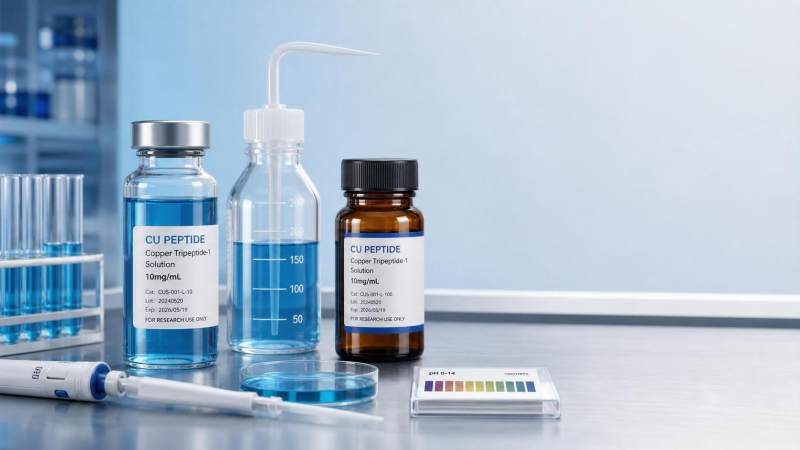
In custom peptide synthesis and commercial-scale manufacturing, quality control (QC) directly dictates the safety, efficacy, and reproducibility of downstream research and industrial applications. Given the structural diversity of peptide sequences and the intricacies of their synthetic chemistry, even minor deviations can compromise product stability. Consequently, evaluating whether a peptide factory is truly reliable requires looking beyond basic production capacity—it demands a thorough assessment of their adherence to rigorous, transparent, and internationally recognized quality control standards.
1. Utilization of High-Resolution Analytical Protocols
An analytical laboratory equipped with state-of-the-art instrumentation forms the backbone of a rigorous QC framework. A reliable manufacturer must utilize analytical High-Performance Liquid Chromatography (HPLC) and Mass Spectrometry (MS) as standard protocols to precisely verify peptide purity, confirm correct molecular weight, and profile any potential synthesis truncheons or impurities. For specialized formulations, advanced testing capabilities—including amino acid analysis (AAA), water content determination via Karl Fischer titration, and counter-ion content quantification—should be systematically employed to provide a comprehensive fingerprint of the compound.
2. Strict Raw Material Vetting and Formal Batch Release Criteria
True quality control is a proactive, continuous philosophy that encompasses the entire manufacturing lifecycle rather than a simple end-product inspection. Trustworthy peptide factories implement strict quality gates for incoming raw materials, verifying the identity and chemical grade of amino acid derivatives, coupling reagents, and production solvents prior to workshop introduction. Following synthesis and purification, the facility must enforce a formal batch release mechanism. Products are only cleared for shipment once all analytical specifications are met and a formal Certificate of Analysis (COA) is validated and signed by an independent Quality Assurance (QA) officer.
3. Comprehensive Batch Documentation and Flawless Traceability
A compliant and reliable QC paradigm dictates that every manufacturing intervention must be fully documented and auditable. From initial synthesis scaling and cleavage to preparative purification, lyophilization, and final packaging, every operational step must be recorded within a structured Batch Manufacturing Record (BMR). This level of data integrity ensures absolute traceability; should any anomaly arise during downstream application, the technical team can instantly retrace the exact production timeline, operator logs, and material lot numbers to establish rapid root-cause analysis.
4. Continuous Equipment Calibration and Validation Protocols
The reliability of analytical data depends entirely on the operational health of the machinery producing it. A leading-edge peptide factory maintains strict validation schedules for all laboratory and production equipment, ensuring compliance with regular calibration parameters. This ongoing maintenance framework prevents analytical drift, ensures that purification systems operate at peak resolution, and guarantees that the high-purity values reported on your technical documentation are consistently precise and legally defensible.